Best Free AI Writing Detector for Essays
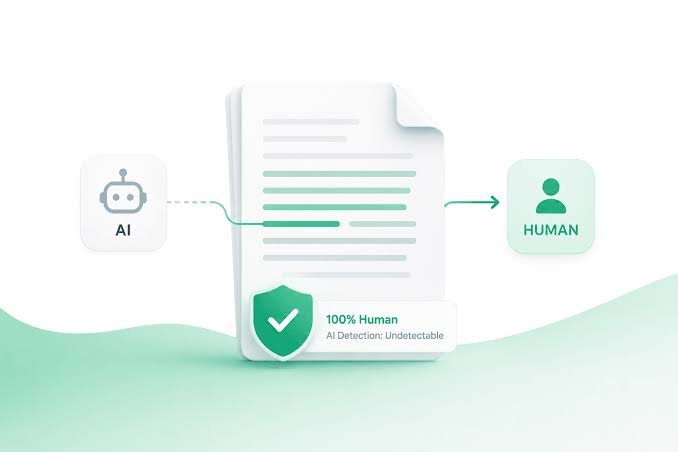
AI writing tools can help students plan, research, and improve their essays. However, many schools and universities want to know whether students have written their work themselves or relied heavily on artificial intelligence. This has made AI writing detectors useful for checking essays before submission.
The best free AI writing detector for essays can help identify text that may have been generated by tools such as ChatGPT. These detectors analyze writing patterns and estimate whether a passage resembles AI generated content or human writing.
However, no AI detector can guarantee an accurate result every time. Some tools may flag original student writing as AI generated, while others may fail to identify text produced by artificial intelligence. For this reason, students, teachers, and academic writers should use detection tools carefully.
This guide explains the best free AI writing detectors for essays, their main features, their limitations, and how to choose the right tool for academic writing.
What Is an AI Writing Detector?
An AI writing detector is an online tool that analyzes text to estimate whether it was written by a human or generated by an artificial intelligence system.
These tools examine different writing characteristics, including sentence structure, word patterns, predictability, and consistency. They use statistical models to identify patterns that may be associated with AI generated content.
For example, a student can paste an essay into an AI detector to receive an assessment of whether the text appears human written, AI generated, or a mixture of both.
Some detectors provide an overall score, while others highlight individual sentences that they consider likely to contain AI generated text.
An AI writing detector is not the same as a plagiarism checker. A plagiarism checker looks for similarities between a document and existing sources. An AI detector estimates the likelihood that a machine generated the text.
Students should understand this difference before choosing a tool.
Best Free AI Writing Detectors for Essays
Several tools offer free access to AI writing detection. Their features, usage limits, and accuracy can vary, so the best choice depends on the length of the essay and the type of feedback required.
1. GPTZero
GPTZero is an AI writing detection tool designed for educators, students, and other users who want to examine written content.
It analyzes text for patterns that may indicate AI generated writing. Depending on the available features and account limits, users can receive an overall assessment and sentence level feedback.
Key features include:
- AI writing detection for essays and other documents
- Analysis of writing patterns
- Sentence level indicators in supported features
- Tools designed for academic and educational use
- Free access with possible usage limits
GPTZero can be useful when a student wants to review an essay before submission or when a teacher needs an initial assessment of a document.
However, its results should not be treated as proof of misconduct. Human writing can sometimes receive an AI classification, particularly when the text uses predictable sentence structures or formal academic language.
Best for: Students and educators who want an AI detector with a focus on academic writing.
2. QuillBot AI Detector
QuillBot offers an AI detector that helps users assess whether text may have been generated by artificial intelligence.
The tool is part of a broader writing platform that includes grammar checking, paraphrasing, and other writing assistance features.
Users can enter essay text and review the detector’s assessment. This can help them understand how the tool interprets their writing.
Key features include:
- AI detection for written content
- A simple interface for checking text
- Integration with a broader writing toolset
- Support for reviewing essays and other documents
- Free access subject to current usage limits
QuillBot may be convenient for students who already use writing tools to improve grammar and sentence clarity.
However, rewriting an essay to change its detection score does not necessarily improve its quality or academic integrity. Students should focus on producing original work, explaining ideas clearly, and citing sources correctly.
Best for: Students who want to combine basic writing assistance with AI content checks.
3. Scribbr AI Detector
Scribbr provides academic writing resources, including an AI detector designed to help users assess written content.
Its academic focus makes it relevant to students who want to review essays, assignments, and other educational documents.
Depending on the tool’s current features, users may receive an assessment of whether their text resembles human written or AI generated content.
Key features include:
- AI detection for academic text
- A straightforward checking process
- Support for reviewing essays and assignments
- Writing resources for students
- Free access to eligible detection features
Scribbr can be a useful option for students who want to check their work while learning more about academic writing standards.
However, an AI detection score does not determine whether an essay meets academic requirements. Students must still check the assignment instructions, citation rules, argument quality, and originality of their work.
Best for: Students who want an AI detector within an academic writing environment.
4. ZeroGPT
ZeroGPT is an online tool that estimates whether submitted text contains AI generated writing.
It is designed for users who want a quick assessment without a complicated setup. Students can use it to examine essays, articles, and other written material.
Key features include:
- AI text detection
- A simple text submission process
- An overall detection assessment
- Support for checking different types of writing
- Free access with potential limits
ZeroGPT may be suitable for an initial review of an essay. Its results can help users identify passages they want to examine more carefully.
However, a high AI score does not automatically mean that a student used AI. Similarly, a low score does not guarantee that every sentence was written by a human.
Best for: Users who want a straightforward tool for an initial AI writing assessment.
5. Copyleaks AI Detector
Copyleaks offers AI content detection for educational and professional use. Its broader services also include plagiarism detection and other content analysis features.
The platform can help users examine written material for patterns associated with AI generated text. Available features may depend on the account, product, and usage plan.
Key features include:
- AI content detection
- Support for educational writing checks
- Additional content analysis features
- Options designed for different types of users
- Free access or trials where currently available
Copyleaks may be worth considering when an institution or educator needs more than a basic text checking tool.
Students should check the current access conditions before using it because not every feature is necessarily available for free.
Best for: Users who want AI detection alongside broader academic content checking features.
6. Sapling AI Detector
Sapling provides AI detection tools that estimate whether text may have been generated by an AI language model.
Its detector can be useful for examining shorter passages, paragraphs, and other text that a student wants to review.
Key features include:
- AI writing assessment
- A simple text based interface
- Analysis of writing patterns
- Support for reviewing individual passages
- Free access with possible restrictions
Sapling may be useful when a student wants a quick second opinion on a particular section of an essay.
As with other detectors, its assessment should be treated as an estimate rather than a definitive conclusion. Results can become less reliable when text is very short or has been substantially edited.
Best for: Users who want to check individual paragraphs or shorter sections of an essay.
Comparison of the Best Free AI Writing Detectors
The following table summarizes the main differences between these tools.
Read also: Best Free QR Code Generator Without Signup
| AI detector | Main purpose | Suitable for | Important consideration |
|---|---|---|---|
| GPTZero | AI writing detection | Academic essays and assignments | Results require human review |
| QuillBot | AI detection and writing assistance | Students improving their writing | Detection and writing improvement are different tasks |
| Scribbr | Academic writing support and AI detection | Essays and school assignments | A detection score does not establish authorship |
| ZeroGPT | Quick AI text assessment | General essay checking | Results may include false positives |
| Copyleaks | AI detection and content analysis | Educational and professional use | Free access may be limited |
| Sapling | AI text assessment | Short passages and paragraphs | Very short samples can be difficult to assess |
Free features and usage limits can change. Before choosing a detector, review its current terms, text limits, supported languages, and privacy policy.
Which Is the Best Free AI Writing Detector for Essays?
The best option depends on your purpose.
GPTZero is a strong starting point for academic essay checks. Its focus on AI detection and educational writing makes it relevant to students and teachers who want to examine longer assignments.
QuillBot is worth considering if you also need writing assistance. Scribbr may appeal to students who prefer tools designed around academic writing. ZeroGPT and Sapling can be useful for quick checks, while Copyleaks may suit users who need broader content analysis.
However, there is no single detector that is always the most accurate for every essay.
AI detection performance can vary according to the language, writing style, length of the text, and AI model involved. A detector that performs well on one type of writing may produce different results on another.
For important academic decisions, using a single score as the only source of evidence is not recommended.
How to Use a Free AI Writing Detector for an Essay
Checking an essay with an AI detector is usually straightforward. The following steps can help you use the tool responsibly.
Step 1: Choose a suitable detector
Select a tool that supports your language and the length of your essay. Check whether it offers free access to the features you need.
Step 2: Prepare your essay
Review the essay for missing sections, incomplete sentences, and formatting problems. Make sure you are checking the correct version of the document.
Step 3: Submit the text
Paste the essay into the detector or upload the document if the tool supports file uploads.
Before submitting your work, check the service’s privacy policy. Avoid uploading confidential research, personal information, or sensitive academic material unless you understand how the service handles submitted text.
Step 4: Review the results
Read the overall assessment and examine any highlighted passages.
If the tool identifies a section as potentially AI generated, consider whether the passage uses repetitive wording, generic explanations, or unusually consistent sentence patterns.
Do not assume that these characteristics prove AI use. Human writers can naturally use the same patterns.
Step 5: Check the essay yourself
Read the flagged sections carefully. Confirm that the ideas reflect your understanding, that factual claims are supported, and that sources are cited correctly.
If you wrote the essay yourself, retain your drafts, research notes, and document history where possible. These materials can help explain your writing process if questions arise.
Step 6: Follow your institution’s rules
Schools and universities have different policies regarding AI writing tools. Some permit limited assistance, while others restrict certain uses.
Always follow your institution’s requirements rather than trying to achieve a particular detector score.
Are Free AI Writing Detectors Accurate?
Free AI writing detectors can be useful, but their accuracy is limited.
Most detectors do not directly observe how a document was created. Instead, they analyze patterns in the finished text and estimate the likelihood of AI involvement.
This creates several challenges.
False positives: A detector may classify human written text as AI generated. Formal academic language, predictable wording, and simple sentence structures may contribute to this problem.
False negatives: A detector may fail to identify AI generated text, particularly when the text has been edited or differs from the patterns the detector recognizes.
Language differences: Performance may vary across languages, writing styles, and levels of English proficiency.
Text length: Short paragraphs provide less information for analysis than longer passages. Results from very short samples may therefore be less dependable.
Different AI systems: Detection tools may perform differently depending on the model that generated the text and the way the content was edited.
For these reasons, an AI detection result should be treated as an estimate, not a verdict. Teachers and institutions should consider additional evidence before making decisions about academic misconduct.
Can an AI Detector Identify ChatGPT Essays?
An AI detector may identify patterns associated with text generated by ChatGPT, but it cannot reliably identify every ChatGPT written essay.
Its performance depends on several factors, including the length of the text, the writing style, and the detector’s underlying model.
A fully AI generated essay may receive a low detection score. In contrast, a student who writes an essay independently may receive a high score.
This means that detection tools cannot guarantee that a particular essay was or was not written using ChatGPT.
Students should use AI tools according to their institution’s policies. If AI assistance is permitted, they should follow any requirements for disclosure, citation, or documentation.
How to Avoid False AI Detection Results
Students who write their essays independently can take practical steps to maintain clear evidence of their work.
First, keep your research notes and early drafts. These documents show how your argument developed over time.
Second, use specific examples and explain ideas in your own words. Clear reasoning and relevant evidence make academic writing more useful, regardless of how a detector classifies it.
Third, cite sources accurately. Proper referencing demonstrates where information came from and helps distinguish your own analysis from the work of others.
Fourth, review flagged passages rather than rewriting the entire essay to satisfy a detector. If a sentence is unclear or repetitive, improve it for readability and meaning.
Finally, follow your institution’s AI policy. If you are questioned about a detection result, explain your writing process honestly and provide supporting drafts or notes when appropriate.
The goal should be to produce clear, original, and academically responsible work, not simply to obtain a low AI detection score.
Conclusion
The best free AI writing detector for essays depends on your needs, preferred features, and available usage limits. GPTZero, QuillBot, Scribbr, ZeroGPT, Copyleaks, and Sapling are options worth considering.
GPTZero is a useful starting point for academic writing checks, while QuillBot and Scribbr may appeal to students who also want writing support. ZeroGPT and Sapling offer options for quick assessments, and Copyleaks provides broader content analysis features.
Before choosing a tool, compare its free features, privacy practices, and limitations.
Most importantly, remember that no AI detector can reliably determine authorship in every case. Use detection results alongside careful reading, writing records, and academic guidelines. This approach provides a more balanced way to evaluate essays and maintain academic integrity.
Frequently Asked Questions
1. What is the best free AI writing detector for essays?
GPTZero is a useful option for students and teachers who want to check academic writing. QuillBot, Scribbr, ZeroGPT, Copyleaks, and Sapling are alternatives. The best choice depends on your requirements and the free features currently available.
2. Can I check an essay for AI writing for free?
Yes. Several online tools provide free AI detection features. However, free plans may restrict the number of checks, the amount of text you can submit, or access to advanced features.
3. Can AI detectors detect ChatGPT essays?
AI detectors can identify patterns associated with ChatGPT generated text, but they cannot detect every AI written essay. Their results may also incorrectly classify human written content.
4. Is an AI detector the same as a plagiarism checker?
No. An AI detector estimates whether text resembles AI generated writing. A plagiarism checker searches for similarities with existing content. The two tools examine different issues.
5. Can an original essay receive a high AI detection score?
Yes. Human written essays can receive high AI detection scores, particularly when they use formal, predictable, or repetitive language. A high score alone does not prove that AI was used.
6. Should I rewrite my essay to get a lower AI detection score?
You should revise your essay to improve clarity, accuracy, structure, and originality rather than simply trying to lower a detection score. Follow your institution’s AI policy, cite your sources correctly, and keep drafts that document your writing process.