Best Sentence Rewriter for Academic Writing
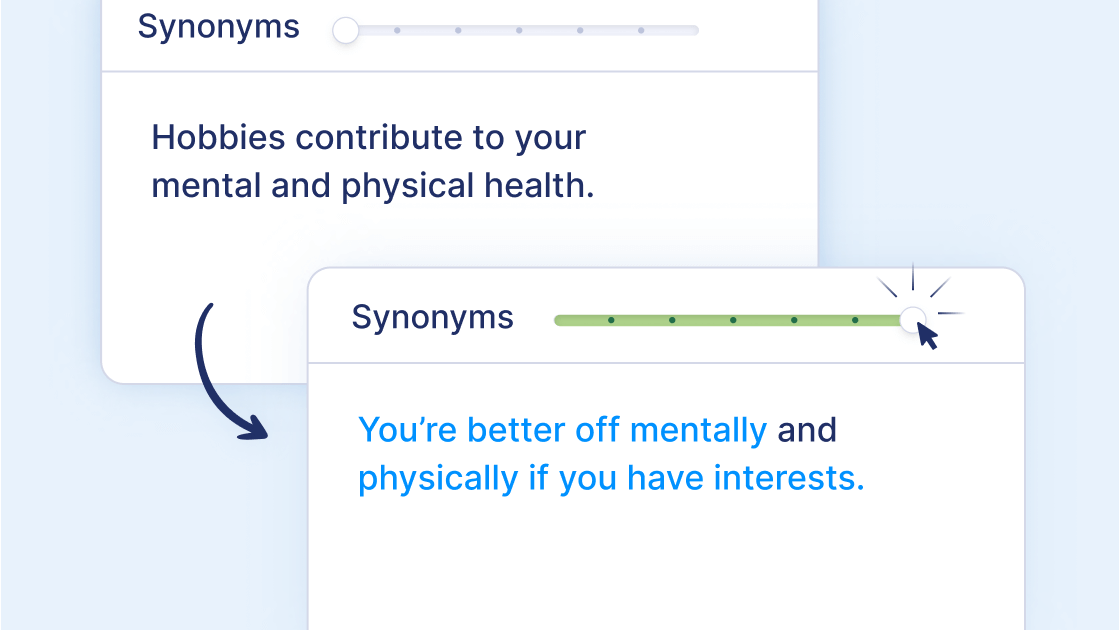
Academic writing requires clear language, accurate information, and a formal tone. Students, researchers, and academic professionals often need to rewrite sentences to improve readability, remove repetition, and communicate ideas more effectively. A sentence rewriter can help with these tasks by suggesting alternative ways to express the same meaning.
The best sentence rewriter for academic writing should do more than replace words with synonyms. It should preserve the original meaning, maintain an appropriate academic tone, and improve sentence structure without changing important details. It should also help writers produce clear, natural sentences while allowing them to retain control over their work.
Several sentence rewriting tools are available for students and researchers. However, the right choice depends on individual needs, such as paraphrasing research material, improving grammar, simplifying complex sentences, or refining a research paper.
This guide explains what makes a good academic sentence rewriter, the features to consider, the benefits and limitations of these tools, and how to use them responsibly.
What Is a Sentence Rewriter for Academic Writing?
A sentence rewriter is a writing tool that changes the structure or wording of a sentence while attempting to preserve its original meaning. It may replace certain words, rearrange phrases, simplify complex expressions, or suggest a more formal way to communicate an idea.
For academic writing, sentence rewriting can help improve clarity, grammar, sentence flow, and readability. It is particularly useful when a sentence contains unnecessary words, repeated expressions, or an awkward structure.
For example, consider the following sentence:
“The results of the study show that regular exercise has a positive effect on the mental health of students.”
A rewritten version might be:
“The study findings indicate that regular physical activity can improve students’ mental well being.”
The revised sentence expresses a similar idea using different wording. However, a writer should check whether the revised wording accurately reflects the original study. In academic work, even small changes can affect the strength or scope of a claim.
A reliable sentence rewriter should therefore improve expression without introducing unsupported information or changing the intended meaning.
Best Sentence Rewriters for Academic Writing
Different rewriting tools serve different purposes. Some focus on paraphrasing, while others concentrate on grammar, readability, or sentence structure.
The following tools are worth considering when choosing a sentence rewriter for academic work.
1. QuillBot
QuillBot is a popular writing tool that offers paraphrasing features for rewriting sentences and paragraphs. It can suggest alternative wording and sentence structures while helping users explore different ways to express an idea.
For academic writing, QuillBot can be useful when a sentence sounds repetitive, awkward, or unnecessarily complicated. Users can compare different versions and select wording that fits the context of their research.
However, the rewritten text still requires careful review. Some suggestions may change the meaning, remove important qualifications, or use words that do not fit the subject.
QuillBot is a suitable option for students who want a dedicated paraphrasing tool to support sentence improvement.
2. Grammarly
Grammarly focuses on grammar, spelling, punctuation, clarity, and writing style. Its rewriting and writing assistance features can help users improve sentence construction and make academic text easier to understand.
For example, a sentence containing unnecessary words may become more concise after revision. Grammarly can also identify grammatical errors that affect the professionalism of a research paper.
It is especially useful when a writer has already developed the main ideas and wants to refine the language before submission.
However, Grammarly is not a replacement for subject knowledge or academic judgment. Writers must still verify technical terminology, research findings, and the accuracy of their claims.
3. Wordtune
Wordtune helps users explore alternative ways to phrase sentences. It can suggest different expressions and adjustments to sentence length, depending on the available features.
This makes it useful for academic writers who struggle to express an idea naturally or want to improve the flow of a paragraph.
For instance, a writer may use Wordtune to explore a more concise version of a long sentence. The writer can then compare the suggested revision with the original and choose the version that communicates the intended meaning more clearly.
Wordtune may be helpful for improving readability, but technical and specialized academic content still requires manual review.
4. Scribbr Paraphrasing Tool
Scribbr provides writing resources for students and researchers, including paraphrasing assistance. Its paraphrasing tool can help users explore alternative wording while working on academic assignments.
It may be useful when a student needs to express a concept from a source in their own words. However, changing the wording alone does not remove the need to cite the original source when the idea comes from another author.
Academic paraphrasing requires an accurate understanding of the source material. Writers should ensure that the revised sentence reflects the author’s original argument and does not introduce a different interpretation.
Scribbr is worth considering for students who want paraphrasing support as part of a broader academic writing process.
5. ChatGPT
ChatGPT can help rewrite academic sentences according to specific instructions. Users can request clearer wording, a formal academic tone, simpler sentence structure, or a more concise expression.
For example, a writer might ask for a sentence to be rewritten in simple academic English without changing its meaning. The tool can then suggest a revised version and, when requested, explain the changes.
One advantage of this approach is that users can provide context. Instead of rewriting an isolated sentence, they can explain the research topic, intended audience, and purpose of the passage.
However, ChatGPT may occasionally change the meaning, introduce unsupported details, or produce inaccurate statements. Users should verify all important information, especially in scientific, medical, legal, and technical research.
ChatGPT can be useful for writers who need flexible rewriting assistance rather than a tool limited to basic paraphrasing.
How to Choose the Best Academic Sentence Rewriter
The best sentence rewriter depends on the type of writing task. Before choosing a tool, consider the following factors.
Meaning Preservation
Meaning preservation is one of the most important features of an academic sentence rewriter. Research writing often contains precise claims, qualifications, and explanations that must remain accurate after revision.
For example, the statement “The findings may suggest a relationship between sleep quality and academic performance” expresses uncertainty.
Changing it to “The findings prove that sleep quality determines academic performance” makes a much stronger claim.
A good rewriting tool should preserve the original level of certainty and avoid changing the relationship between ideas.
Academic Tone
Academic writing generally requires a formal, objective, and precise tone. The best sentence rewriter should avoid casual expressions, exaggerated language, and unnecessary emotional wording.
It should also preserve appropriate terminology. Replacing a technical term with a general synonym may make a sentence less accurate.
Writers should choose revisions that suit their discipline, whether they are preparing a literature review, research proposal, dissertation, or journal article.
Read also: 10 Free Tools to Check Your Blog’s Readability Score
Grammar and Sentence Structure
A sentence rewriter should help correct grammatical problems and improve the arrangement of ideas.
Long sentences can sometimes be divided into shorter statements. Repeated phrases can be removed, and unclear expressions can be replaced with more direct language.
However, shorter sentences are not always better. Some academic arguments require complex structures to explain relationships between variables, methods, and results.
The goal is to improve readability without removing essential information.
Ease of Use
A useful tool should allow writers to submit text, review suggested changes, and edit the results without unnecessary difficulty.
Some writers prefer dedicated paraphrasing tools, while others prefer writing assistants that provide grammar corrections and explanations.
Consider whether the tool supports the length of text you need to revise, offers the features you require, and fits your budget.
It is also important to review the tool’s privacy policy before submitting unpublished research, confidential information, or sensitive academic material.
Citation and Academic Integrity
A sentence rewriter should support responsible writing rather than help users disguise copied material.
If an idea comes from another author’s work, rewriting the sentence does not eliminate the obligation to acknowledge that source. Direct quotations also require appropriate quotation formatting and citation.
Writers should follow their institution’s rules on paraphrasing, artificial intelligence, and permitted writing assistance.
Benefits of Using a Sentence Rewriter for Academic Writing
Sentence rewriting tools can make the editing process more manageable when used appropriately.
First, they can improve clarity. Writers sometimes understand an idea but struggle to express it in a direct and readable way. Alternative sentence structures can help them communicate the idea more effectively.
Second, these tools can reduce repetition. Academic papers often discuss related concepts across several sections. A rewriting tool can suggest alternative expressions, although writers should avoid changing terminology when consistency is important.
Third, sentence rewriters can help nonnative English speakers improve sentence construction. They may provide useful examples of formal phrasing, grammar, and word choice.
Fourth, they can support editing efficiency. Instead of spending excessive time revising a single sentence, writers can compare several suggestions and focus on the version that best communicates their intended meaning.
Finally, rewriting tools can support language learning. Reviewing the differences between an original sentence and its revised version can help writers recognize awkward structures and develop stronger editing skills.
These benefits depend on the quality of the suggestions and the writer’s ability to evaluate them critically.
Limitations of Academic Sentence Rewriters
Although sentence rewriters can be helpful, they have several limitations.
One common problem is meaning distortion. A tool may replace a word with a similar expression that has a different technical meaning or level of certainty.
Another limitation is unnatural wording. Automated rewriting may produce sentences that sound formal but are difficult to understand. In some cases, a simple original sentence may be better than the suggested revision.
Sentence rewriters may also remove important context. When a sentence contains several connected ideas, changing its structure can weaken the logical relationship between them.
Furthermore, these tools cannot guarantee that a paper is original, factually accurate, or compliant with academic policies. A rewritten sentence may still require a citation, and an original sounding sentence may still contain an unsupported claim.
For these reasons, writers should treat rewriting tools as editing assistants rather than authorities.
How to Rewrite Academic Sentences Effectively
Using a clear process can help you get better results from a sentence rewriter.
Step 1: Identify the problem.
Determine whether the sentence needs grammatical correction, simpler wording, a more formal tone, or a shorter structure. A clear objective makes it easier to evaluate the suggested revision.
Step 2: Provide sufficient context.
When using an AI writing assistant, include the sentence and, when necessary, the surrounding paragraph. Explain the intended meaning and ask the tool to preserve important terminology and qualifications.
Step 3: Compare the revised sentence with the original.
Check whether the revision communicates the same idea. Pay attention to technical terms, cause and effect relationships, numerical details, and expressions of uncertainty.
Step 4: Check grammar and readability.
Read the revised sentence carefully. Remove unnecessary words, correct awkward expressions, and ensure that the sentence fits the academic tone of the paper.
Step 5: Verify facts and citations.
Confirm that the revision accurately represents the research or source material. Keep the necessary citations and follow the relevant academic integrity requirements.
Step 6: Make the final decision yourself.
Choose the version that communicates your intended meaning most clearly. You can also combine useful suggestions with your own edits to produce a more accurate and natural sentence.
Frequently Asked Questions
1. What is the best sentence rewriter for academic writing?
The best option depends on your needs. QuillBot is useful for paraphrasing, Grammarly supports grammar and clarity, Wordtune offers alternative phrasing, Scribbr provides academic paraphrasing assistance, and ChatGPT supports context based rewriting.
2. Can I use a sentence rewriter for a research paper?
Yes. You can use a sentence rewriter to improve clarity, grammar, and sentence structure. However, you should verify every revision, preserve the original meaning, and follow your institution’s rules on writing assistance.
3. Does rewriting a sentence prevent plagiarism?
No. Rewriting changes the wording but does not remove the need to acknowledge ideas taken from other sources. Proper paraphrasing requires accurate expression and appropriate citations.
4. Are free sentence rewriters good for academic writing?
Free tools can be useful for basic paraphrasing, grammar correction, and sentence improvement. However, their features and usage limits vary. Always review the quality of the output rather than relying on the tool alone.
5. Can AI rewrite academic sentences without changing their meaning?
AI tools can often suggest suitable alternatives, but they cannot guarantee complete meaning preservation. Writers should compare each revision with the original and check technical terms, factual details, and the strength of the claims.
6. How can I make rewritten academic sentences sound natural?
Use clear instructions, preserve important terminology, and avoid unnecessary synonyms. Read the revised sentence alongside the surrounding paragraph to ensure that it sounds natural, maintains a formal tone, and communicates the intended meaning accurately.