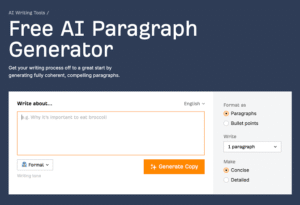
Best AI Tools for Writing Blog Posts Without Plagiarism
Artificial intelligence has made blog writing faster and more accessible. Bloggers, content marketers, business owners, and website managers can now use AI writing tools to research topics, create outlines, draft articles, and improve existing content. However, producing original content requires more than generating text with an AI tool.
The best AI tools for writing blog posts without plagiarism help users develop ideas, organize information, improve readability, and create content that serves readers. When used correctly, these tools can support an efficient writing process while helping writers avoid copied content and unnecessary repetition.
It is important to understand that no AI writing tool can guarantee that every article will be completely free from plagiarism. AI generated content may contain phrases similar to existing publications, incorrect information, or unsupported claims. Writers must review their drafts, verify important facts, and check for unintentional similarities before publishing.
This article explores the best AI tools for writing original blog posts, explains their main features, and shows how to use them responsibly for search engine optimization.
What Are AI Writing Tools?
AI writing tools are software applications that use artificial intelligence to help users create, edit, and improve written content. They can generate article outlines, suggest headlines, rewrite sentences, summarize information, and correct grammatical errors.
Some tools focus on general writing, while others specialize in marketing content, search engine optimization, or plagiarism detection.
For bloggers, these tools can reduce the time required to prepare an article. They can also help beginners overcome writer’s block and maintain a consistent writing schedule.
However, AI should support the writing process rather than replace human judgment. Writers still need to provide accurate information, original insights, and practical examples that make their articles valuable.
Best AI Tools for Writing Blog Posts Without Plagiarism
Several AI tools can help bloggers produce original, readable, and search optimized content. The right choice depends on your writing needs, budget, and preferred workflow.
1. ChatGPT
ChatGPT is a flexible AI writing assistant that can help with nearly every stage of blog creation. Users can generate topic ideas, create outlines, draft sections, improve sentence structure, and rewrite unclear paragraphs.
One useful feature is its ability to follow detailed instructions. For example, you can specify your target audience, preferred tone, article length, primary keyword, and content structure before requesting a draft.
ChatGPT can also help identify repetitive language and suggest alternative ways to explain a topic. You can provide your own notes, research findings, or business experience to make the content more specific.
To reduce plagiarism risks, instruct ChatGPT to develop original explanations instead of reproducing existing articles. Always review the output for factual accuracy and similarities to published material.
Best for: Bloggers who want a flexible writing assistant for research planning, drafting, editing, and SEO content development.
2. Claude
Claude is an AI assistant that can help writers develop detailed articles, organize complex information, and improve the flow of long form content.
It is useful when a blog post requires clear explanations, balanced arguments, and a consistent tone. Writers can provide background information and ask Claude to turn it into a structured article for a specific audience.
For example, a technology blogger could provide product specifications and personal testing notes, then ask Claude to organize the information into sections covering features, limitations, and practical uses.
This approach gives the article a stronger factual foundation than relying on general AI generated statements.
Claude does not guarantee plagiarism free writing. Writers should check the finished article for accuracy, originality, and unsupported claims before publishing.
Best for: Long articles, detailed explanations, educational content, and structured writing projects.
3. Google Gemini
Google Gemini can assist with topic development, content planning, outlining, and drafting blog posts. It can also help writers explore different approaches to a subject and identify questions that readers may want answered.
For SEO content, Gemini can help generate related keywords, suggest useful subheadings, and organize information around search intent. Writers can use these suggestions to build an article that answers a reader’s main question without unnecessary repetition.
However, keyword suggestions and factual statements still require review. A relevant keyword does not automatically make a paragraph useful, and an AI generated answer may contain mistakes.
To improve originality, provide your own research, examples, and audience requirements. Ask Gemini to develop the material into a clear article rather than imitate a competitor’s published content.
Best for: Content planning, topic exploration, outlines, and general blog writing.
4. Grammarly
Grammarly focuses on improving the quality and clarity of written content. It helps users identify grammatical errors, spelling mistakes, awkward sentences, and problems with tone.
Although Grammarly is not primarily a blog generation tool, it can improve an AI generated draft before publication.
For example, you can use another AI assistant to create the first draft and then review the text with Grammarly. This process helps make the article more readable and consistent.
Depending on the available plan and features, Grammarly may also provide plagiarism checking. Such checks can help identify matching text in the sources covered by its detection system.
A clean grammar report does not prove that an article is original. Writers should treat grammar checking and plagiarism checking as separate tasks.
Best for: Editing, proofreading, improving readability, and reviewing existing blog posts.
5. QuillBot
QuillBot provides writing assistance through tools such as paraphrasing, grammar checking, summarization, and other text improvement features.
Its paraphrasing tool can help writers express ideas more clearly or change sentence structures that sound repetitive. This can be useful when revising an early draft or improving notes written in an awkward style.
However, paraphrasing is not a reliable way to eliminate plagiarism on its own. Replacing words with synonyms while keeping another writer’s ideas and structure may still result in plagiarism.
When using information from an external source, understand the original meaning, write an independent explanation, and provide attribution when required. Do not use paraphrasing tools to disguise copied material.
Best for: Rewriting unclear sentences, improving phrasing, summarizing information, and editing drafts.
6. Jasper
Jasper is an AI writing platform designed primarily for marketing and business content. It can help teams create blog posts, campaign content, product descriptions, and other written materials.
Its marketing focused approach makes it useful for businesses that need a consistent brand voice across multiple articles.
Writers can establish content requirements and use them to guide the creation of different sections. This can help maintain a consistent tone when several people contribute to the same blog.
However, brand consistency is different from originality. Jasper generated content still requires fact checking, editing, and plagiarism review.
Best for: Marketing teams, business blogs, and organizations that produce content regularly.
7. Surfer
Surfer is an SEO focused content optimization platform that helps writers align articles with relevant search queries and competing content.
Read also: How to Increase Resolution of an Image Online Free
It can provide recommendations about keywords, headings, content structure, and related topics. These features can help bloggers identify important subjects to cover when preparing an article.
For example, an article targeting the keyword best AI writing tools may also need to explain pricing considerations, practical uses, limitations, and originality checks.
Surfer can help writers identify these content opportunities. However, SEO optimization does not guarantee originality, factual accuracy, or higher search rankings.
Use its recommendations as guidance rather than copying the structure or wording of competing pages.
Best for: On page SEO, content optimization, keyword coverage, and improving article structure.
8. Copyscape
Copyscape is a plagiarism detection service designed to help users identify matching content published elsewhere online.
Unlike general AI writing assistants, its main purpose is to help detect possible duplication rather than generate blog posts.
Bloggers can use plagiarism checking as a final review step before publishing an article. When a report identifies matching passages, examine each result to determine whether it contains common expressions, properly attributed quotations, or potentially copied material.
A matching phrase does not always prove plagiarism. Some wording is common across many articles, and legitimate quotations may also produce matches.
Similarly, a report without detected matches does not guarantee complete originality because no detection system covers every possible source.
Best for: Checking published web content for possible duplication and reviewing articles before publication.
Comparison of the Best AI Writing Tools
The following table summarizes the main strengths of each tool.
| AI tool | Main purpose | Best use |
|---|---|---|
| ChatGPT | General AI writing | Drafting and editing blog posts |
| Claude | Long form writing | Detailed articles and explanations |
| Google Gemini | Content development | Topic research and outlining |
| Grammarly | Writing improvement | Grammar, clarity, and proofreading |
| QuillBot | Text refinement | Paraphrasing and rewriting |
| Jasper | Marketing content | Business and promotional blogs |
| Surfer | SEO optimization | Keyword and content optimization |
| Copyscape | Plagiarism detection | Checking for matching online content |
These tools serve different purposes. A general writing assistant can help create an article, while a grammar checker improves its presentation and a plagiarism checker identifies possible text duplication.
For many bloggers, combining a writing assistant with an editing tool and an independent originality check is more practical than expecting one application to handle everything.
How to Write Blog Posts Without Plagiarism Using AI
Choosing the right software is only one part of producing original content. Your writing process also matters.
1. Start With Your Own Topic Research
Before generating an article, identify the question your audience wants answered. Review reliable information, collect relevant facts, and record your own observations.
Avoid asking an AI tool to reproduce a competitor’s article. Instead, use your research to develop an independent outline that addresses the topic from your audience’s perspective.
2. Give the AI Clear Instructions
Provide the target keyword, intended audience, article purpose, preferred tone, and key points to cover.
You can also request original examples, practical recommendations, and clear explanations. Specific instructions help the tool produce content that better matches your requirements.
3. Add Original Insights
AI generated drafts often contain broad explanations that appear in many articles.
Improve your content by adding personal experience, product testing results, expert commentary, original examples, or observations relevant to your readers.
These additions make the article more useful and give it a distinct perspective.
4. Verify Facts and Claims
AI tools can generate incorrect statistics, outdated information, and statements that sound convincing without adequate evidence.
Check important claims against reliable sources. Pay particular attention to statistics, product features, pricing, legal requirements, and technical information.
Rewrite or remove claims that you cannot verify.
5. Check for Plagiarism
Use an appropriate plagiarism checker to identify potentially matching passages. Review flagged text carefully and revise material that relies too heavily on another source.
Remember that plagiarism checking cannot prove that every sentence is original. Some tools may miss restricted, unpublished, or unindexed material.
6. Edit Before Publishing
Read the entire article and remove repetitive explanations, unnecessary sentences, and unnatural keyword placements.
Make sure each section answers a useful question and connects logically with the next section.
Finally, confirm that the article satisfies the search intent and provides information readers can apply.
Can AI Generated Blog Posts Rank on Google?
AI generated blog posts can appear in Google search results. The important consideration is the quality and usefulness of the content, not simply whether a human or an AI produced the first draft.
A strong blog post should answer the reader’s question, provide accurate information, demonstrate appropriate knowledge, and offer a satisfying reading experience.
Publishing large volumes of repetitive articles with little original value can create problems regardless of the writing method. Adding keywords or passing a plagiarism check does not automatically make content useful.
For better SEO results, focus on search intent, accurate information, clear structure, original insights, and a positive user experience.
AI tools can support these goals, but they cannot guarantee rankings or replace careful editorial decisions.
Frequently Asked Questions
1. What is the best AI tool for writing blog posts without plagiarism?
ChatGPT is a flexible option for drafting and editing blog posts. Claude and Google Gemini are also useful alternatives. However, no AI writing tool can guarantee plagiarism free content, so writers should review and check every article before publishing.
2. Can AI writing tools create 100 percent original content?
AI tools can generate new combinations of words and ideas, but they may produce text similar to existing publications. Complete originality cannot be guaranteed. Human review, independent research, and plagiarism checks help reduce the risk of accidental duplication.
3. Is AI generated content considered plagiarism?
AI generated content is not automatically plagiarism. However, it may contain copied or closely matching passages, and using another person’s ideas without appropriate attribution can still be plagiarism. Writers should check their content and follow relevant academic, professional, and publishing standards.
4. Which tool is best for checking plagiarism in blog posts?
Copyscape is designed to identify matching content published online. Grammarly may also offer plagiarism detection, depending on the available features and plan. Each tool has limitations, so review flagged passages rather than relying only on an automated score.
5. Is paraphrasing enough to avoid plagiarism?
No. Changing a few words or rearranging sentences does not necessarily make copied material original. Writers should understand the source, explain the information independently, and provide attribution when necessary.
6. How can I make AI written blog posts more SEO friendly?
Start with a clear search intent, organize the article with useful headings, include relevant keywords naturally, and provide accurate answers to readers’ questions. Add original examples, remove repetitive content, and check the final draft for grammar and possible plagiarism before publishing.