12 Best AI Tools for Writing Product Descriptions
Writing clear and engaging product descriptions is essential for any online store. A good description explains what a product does, highlights its key features, and helps customers understand why it may suit their needs. However, creating unique descriptions for hundreds or thousands of products can take considerable time.
AI tools for writing product descriptions can help businesses create product copy faster, improve readability, and maintain a consistent brand voice. These tools use artificial intelligence to generate text from product details, keywords, features, and other instructions.
Whether you run a Shopify store, sell on Amazon, manage an ecommerce website, or work as a product copywriter, the right AI writing tool can simplify your workflow.
In this article, we explore the 12 best AI tools for writing product descriptions, their main features, their benefits, and how to choose the right option for your business.
What Are AI Tools for Writing Product Descriptions?
AI product description tools are writing applications that generate or improve product content using artificial intelligence. They can turn basic product information into readable descriptions for online stores, marketplaces, and digital catalogs.
For example, you can provide a product name, its materials, dimensions, main benefits, and target audience. The tool can use these details to create a structured description that customers can understand.
Depending on the platform, you may also be able to generate product titles, bullet points, meta descriptions, and social media captions.
These tools are particularly useful for businesses that manage large product catalogs. However, reviewing AI generated content remains important because the final description must accurately represent the product.
12 Best AI Tools for Writing Product Descriptions
1. ChatGPT
ChatGPT is a flexible AI writing tool that can help businesses create product descriptions for different industries and sales channels.
You can provide product specifications, customer needs, target keywords, and brand guidelines to generate relevant copy. You can also request different versions of the same description for testing or use across multiple platforms.
ChatGPT can write short descriptions, detailed product pages, feature lists, and search engine optimized product copy.
Best for: Businesses that need flexible product description writing and editing.
Key benefits: Customizable writing, multiple content formats, tone adjustments, and support for different product categories.
For the best results, provide accurate product information and specify the intended audience. You can also ask ChatGPT to avoid unsupported claims and include relevant keywords naturally.
2. Jasper
Jasper is an AI writing platform designed for marketing and business content. It helps teams create product descriptions that follow a consistent brand voice.
The platform is useful for businesses that need more than basic product copy. Marketing teams can use it to develop product messaging that aligns with advertising campaigns, website content, and other promotional materials.
Jasper can also help adapt messaging for different audiences and marketing channels.
Best for: Marketing teams and established ecommerce businesses.
Key benefits: Brand voice support, marketing focused writing, and reusable content workflows.
Jasper may be particularly useful when several team members create descriptions and need to maintain consistent messaging across a product catalog.
3. Copy.ai
Copy.ai provides AI powered writing capabilities for marketing and sales content. It can help users generate product descriptions from basic information and adapt the content for different purposes.
For example, an online retailer can use it to create product summaries, benefit focused copy, and promotional text. Businesses can also use its broader workflow capabilities to support content production processes.
Best for: Businesses that create product descriptions alongside other marketing content.
Key benefits: Content generation, reusable workflows, and support for multiple marketing formats.
Copy.ai is worth considering if your team wants to organize product writing as part of a broader content workflow rather than use a separate tool for every task.
4. Writesonic
Writesonic is an AI writing platform that supports marketing content, website copy, and search focused writing.
It can help ecommerce businesses develop product descriptions that explain product benefits while incorporating relevant search terms. Users can provide product details and instructions to guide the generated content.
The platform may also support related tasks, such as writing product page copy and other website content.
Best for: Ecommerce businesses that want to combine AI writing with search focused content creation.
Key benefits: Marketing copy generation, customizable content, and support for SEO related tasks.
When using Writesonic, focus on the search intent behind your product pages. Include relevant terms without making the description repetitive or difficult to read.
5. Rytr
Rytr is an AI writing assistant that helps users create short and long form content. It can be useful for writing concise product descriptions when time and budget are important considerations.
You can use it to turn product features into simple benefit statements or produce several versions of a description for different audiences.
Its straightforward approach can make it suitable for small businesses and individual sellers.
Best for: Freelancers, small businesses, and sellers with straightforward writing needs.
Key benefits: Simple content generation, writing assistance, and support for different content types.
Rytr is a practical option for users who want help with everyday product copy without adopting a complex content management process.
6. Anyword
Anyword focuses on AI writing for marketing and performance oriented content. It can help businesses develop product messaging for different customer groups and marketing objectives.
For product descriptions, this can be useful when you want to emphasize different benefits for different audiences.
For example, a skincare business might focus on ease of use for beginners and ingredient details for experienced customers, provided the claims are supported by the product information.
Best for: Marketing teams that test different product messages.
Key benefits: Audience focused writing, marketing copy generation, and support for performance oriented content workflows.
Anyword can be useful when product description writing forms part of a larger strategy to improve customer engagement and sales performance.
7. Hypotenuse AI
Hypotenuse AI is designed for ecommerce content and product information management. It can help businesses generate product descriptions from product data and create content for large catalogs.
This makes it relevant to retailers that manage many products with similar information structures.
For example, a clothing retailer can use consistent product attributes such as material, fit, color, and size to guide description creation.
Best for: Ecommerce retailers with large product catalogs.
Key benefits: Product content generation, catalog focused workflows, and support for producing descriptions at scale.
Before publishing descriptions in bulk, check that each product has the correct specifications. Similar products can have small differences that significantly affect the accuracy of their descriptions.
8. CopySmith
CopySmith focuses on ecommerce and marketing copy. It can help retailers create product descriptions and other content used across online stores.
Read also: Best Free Plagiarism Checker for Students
Businesses that manage multiple products may find this type of specialized writing platform useful for organizing content production.
It can also help teams develop descriptions that follow a consistent structure across different product categories.
Best for: Ecommerce teams that need structured product content.
Key benefits: Ecommerce focused writing, repeatable content creation, and support for product marketing tasks.
Before selecting CopySmith, review its current product offerings and integrations to confirm that they support your store platform and content requirements.
9. Shopify Magic
Shopify Magic is Shopify’s collection of AI powered features designed to help merchants with tasks across the Shopify platform.
Its product description generation feature can help eligible merchants create product copy from information they provide about an item.
This makes it convenient for businesses that already manage their products in Shopify. Merchants can work within their existing store environment instead of transferring product information to a separate writing application.
Best for: Shopify store owners.
Key benefits: Integration with the Shopify environment, convenient product copy generation, and support for everyday store management.
Shopify Magic is a sensible starting point for merchants who need basic AI writing assistance. Review the generated descriptions carefully to ensure they match the product and the store’s brand voice.
10. Canva Magic Write
Canva Magic Write is an AI writing feature within Canva. Although Canva is widely used for graphic design, its writing tools can also help businesses prepare product descriptions and related marketing copy.
This can be useful for sellers who create product listings alongside promotional graphics, product catalogs, and social media content.
For example, a small business can draft a product description and then use the same product information to prepare supporting marketing materials.
Best for: Small businesses that combine product writing with visual content creation.
Key benefits: Writing assistance within Canva, support for marketing content, and a convenient workflow for visual projects.
Canva Magic Write is less specialized than some ecommerce focused tools, so it may require more manual organization when handling large product catalogs.
11. Wordtune
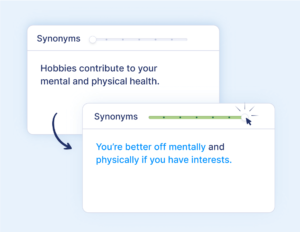
Wordtune is a writing assistant that helps users rewrite sentences, improve clarity, and adjust wording.
Rather than relying entirely on automatic product description generation, businesses can use Wordtune to refine existing copy.
For example, you can simplify a technical product description, reduce unnecessary wording, or make a sentence easier for customers to understand.
Best for: Businesses that want to improve existing product descriptions.
Key benefits: Sentence rewriting, clearer wording, and help with readability.
Wordtune can be especially useful when a description contains accurate product information but needs better phrasing. It is important to check that rewriting does not change the meaning of specifications or product claims.
12. Grammarly
Grammarly is a writing assistant that helps users improve grammar, spelling, clarity, and tone. Its AI features can also assist with drafting and revising content, depending on the plan and available features.
For ecommerce businesses, Grammarly can help review product descriptions before publication.
It is particularly useful for catching writing mistakes, correcting awkward sentences, and maintaining a professional tone across product pages.
Best for: Businesses that need proofreading and writing refinement.
Key benefits: Grammar checking, clarity improvements, tone guidance, and writing assistance.
Grammarly is a useful final review tool, although it does not replace the need for accurate product information or a clear content strategy.
How to Choose the Best AI Tool for Product Descriptions
The best AI product description generator depends on your business size, content requirements, budget, and existing workflow.
Consider the following factors before making a decision.
Ease of use: Choose a tool that allows you to provide product information and generate useful descriptions without unnecessary steps.
Ecommerce integration: If you use Shopify or another ecommerce platform, check whether the tool works with your existing store or content management system.
SEO capabilities: Look for features that help you incorporate relevant search terms, write clear product titles, and create useful meta descriptions. Remember that using an AI tool does not guarantee higher search rankings.
Brand voice: Your product descriptions should sound consistent across your store. Choose a tool that allows you to control tone, terminology, and writing style.
Bulk content generation: If you manage hundreds of products, prioritize tools that support structured product data and scalable content workflows.
Pricing: Compare free access, usage limits, subscription costs, and the features included in each plan. Check current pricing before committing to a subscription.
Tips for Writing Better Product Descriptions With AI
AI tools work best when you provide clear instructions and accurate product details.
Start by including the product name, main features, specifications, intended audience, and practical benefits. If you have a preferred tone, explain whether the description should sound professional, friendly, technical, or straightforward.
Next, identify the primary keyword for the product page. Use it naturally in the title or description where appropriate. Add related terms only when they accurately describe the product.
Ask the AI tool to focus on customer needs rather than simply repeating a list of features. For example, a lightweight backpack may be easier to carry during daily travel. However, avoid adding claims about durability, waterproofing, or performance unless the available product information supports them.
Finally, review the description before publishing it. Check factual accuracy, spelling, readability, duplicate content, and consistency with the product specifications.
AI should support your writing process, not replace editorial judgment.
Frequently Asked Questions
1. What is the best AI tool for writing product descriptions?
ChatGPT is a flexible choice for generating and refining product descriptions. Shopify Magic is convenient for Shopify merchants, while Hypotenuse AI is worth considering for businesses with large product catalogs.
2. Can AI write SEO friendly product descriptions?
Yes. AI tools can help incorporate relevant keywords, improve readability, and organize product information. However, you should review each description to ensure it meets customer needs and accurately represents the product.
3. Are AI product description generators free?
Some tools offer free access or limited free features. Others require paid subscriptions. Pricing and usage limits vary, so check the current terms of each platform before choosing one.
4. Can AI generate descriptions for hundreds of products?
Yes. Some ecommerce focused platforms support bulk content generation or structured catalog workflows. The available features depend on the tool, subscription, and product data format.
5. Do AI generated product descriptions affect SEO?
AI generated content is not automatically harmful to SEO. The important factors include usefulness, originality, accuracy, and relevance to the search query. Descriptions should provide genuine value rather than exist solely to manipulate rankings.
6. Should I edit AI generated product descriptions before publishing?
Yes. Always check the content for factual accuracy, clarity, brand consistency, and unsupported claims. Human review helps ensure that customers receive reliable information and understand what they are buying.